Rectangular Fumed White Oak Dining Table
About The Project
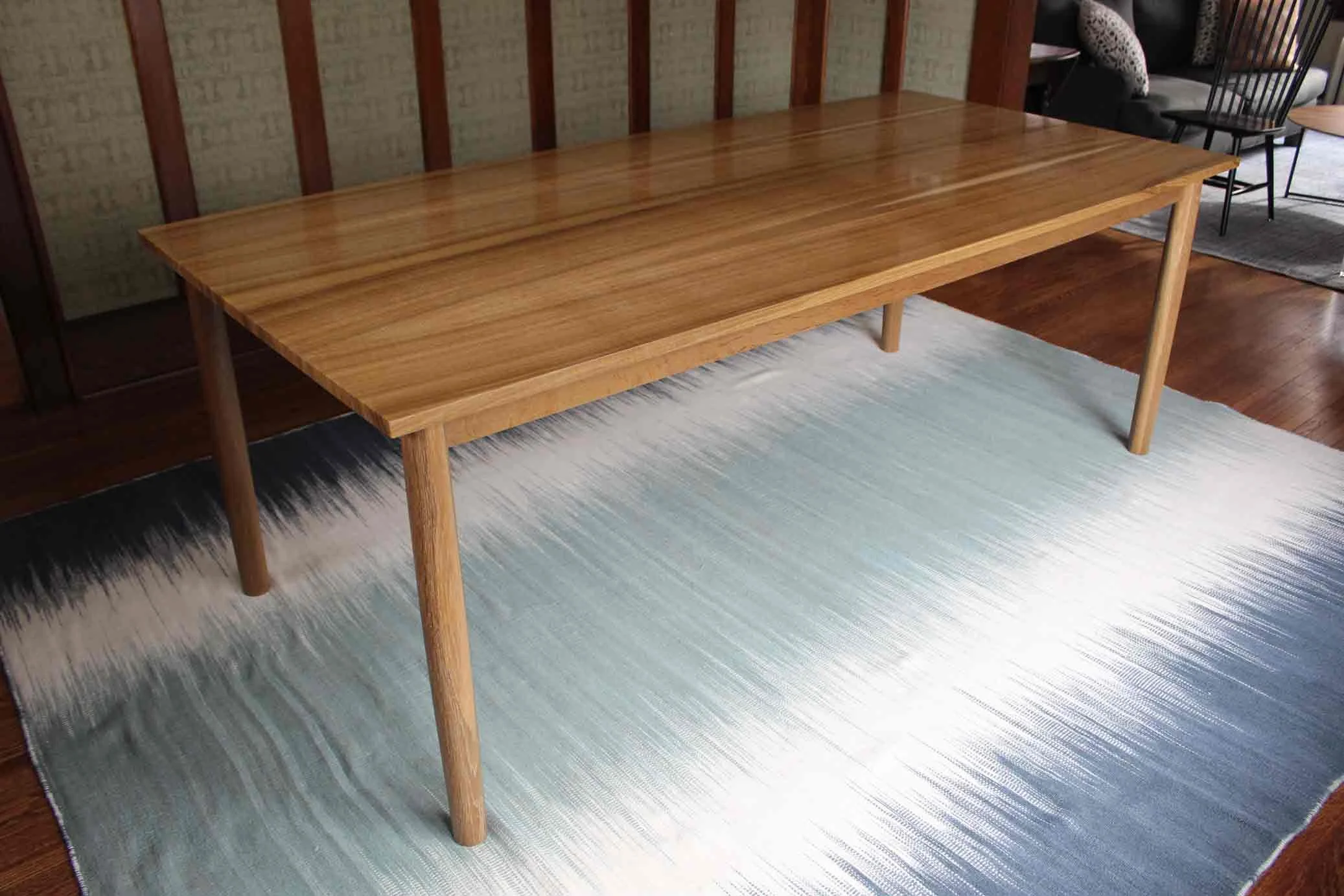
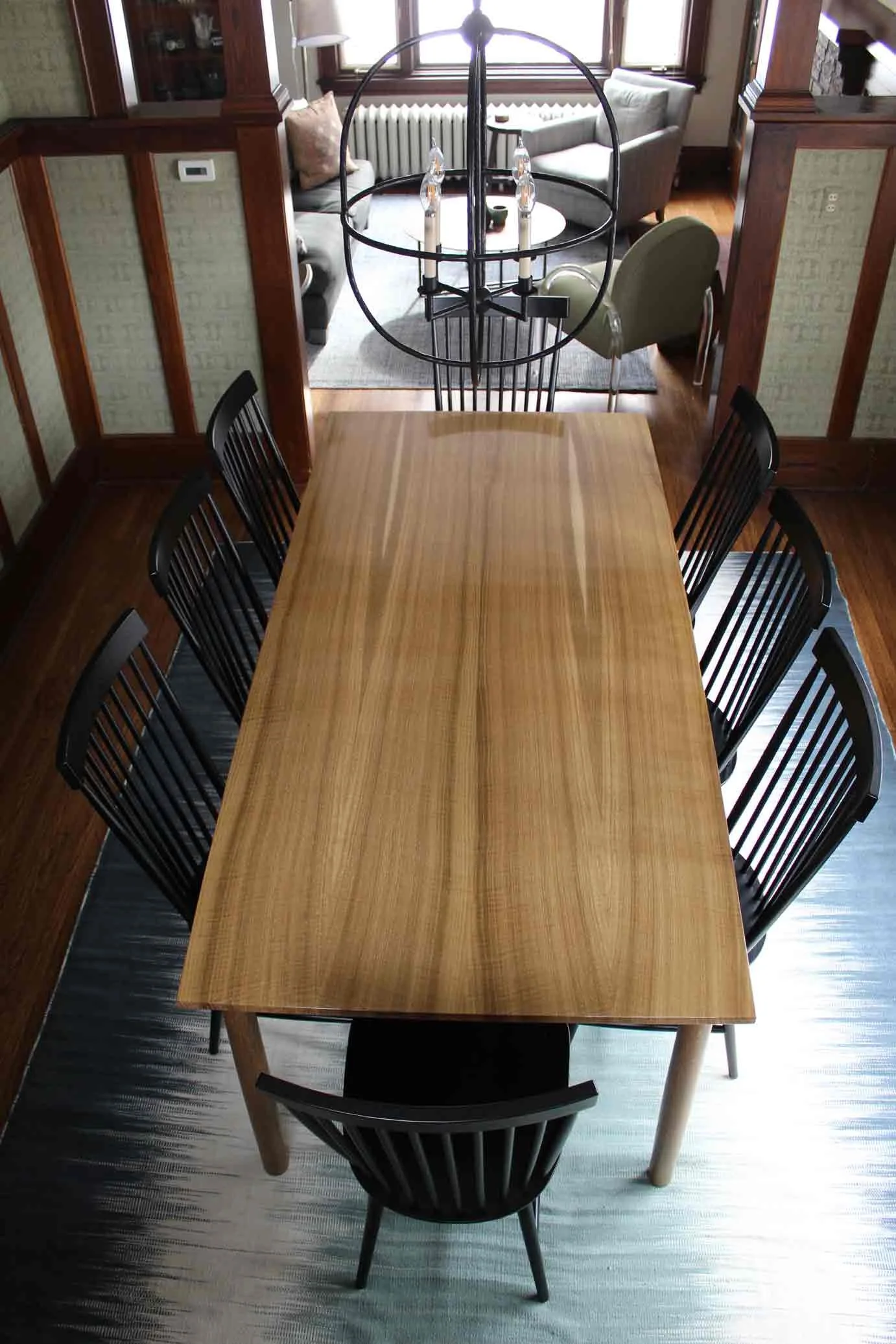
This table shows off the true beauty of mother nature. The grain patterns and colors of the top are spectacular, as best seen from the overhead view photo below. This look is achieved by how the wood was cut, how it was glued together, and how it was colored.
The four boards that make up the top were sequentially cut from the same white oak log. This results in a repeating grain pattern across the top - each board looks like the other. The wood was quarter sawn, which is the process of cutting the boards with the saw cut perpendicular to the annual rings. This results in the board faces with a tight, uniform and parallel grain pattern.
The boards were glued together in a bookmatched pattern. In this process, two consecutively cut boards are opened and glued together along matching edges, much like opening two opposing pages of a book. This results in the two boards creating a mirror image of each other. On this table there are two sets of bookmatches.
The color was achieved by exposing the table to industrial ammonia fumes, which cause the tannic acid in the wood to darken. After assembly and sanding, the table was placed in a large plastic tent along with an open pan of ammonia. The longer the exposure to the fumes, the darker the color. This process highlights the wood’s natural color striations, curly grain waves, and ray flecks. Unlike staining which is most often used on commercial furniture, fuming accents the natural variations of the wood, and doesn’t mask them.
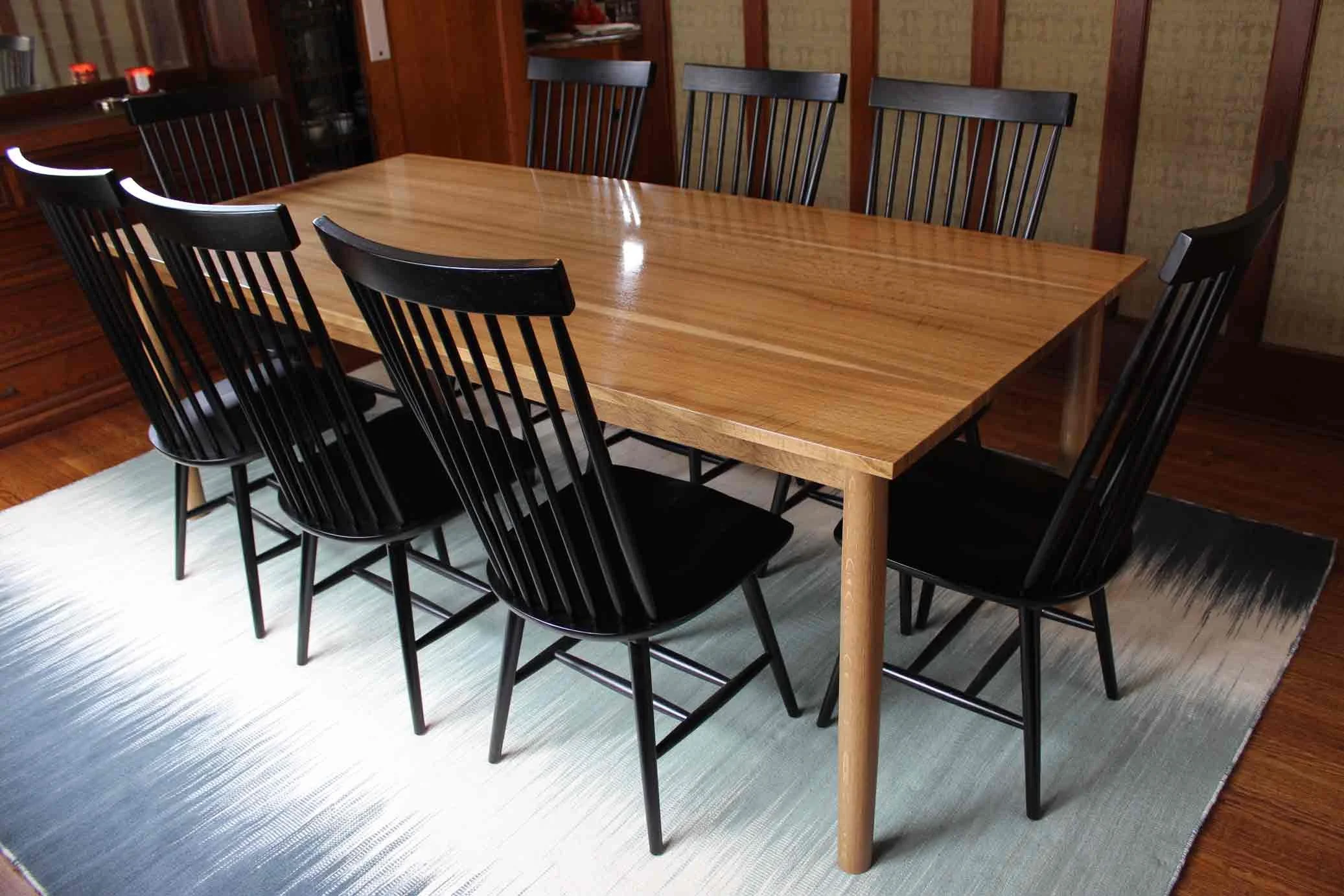
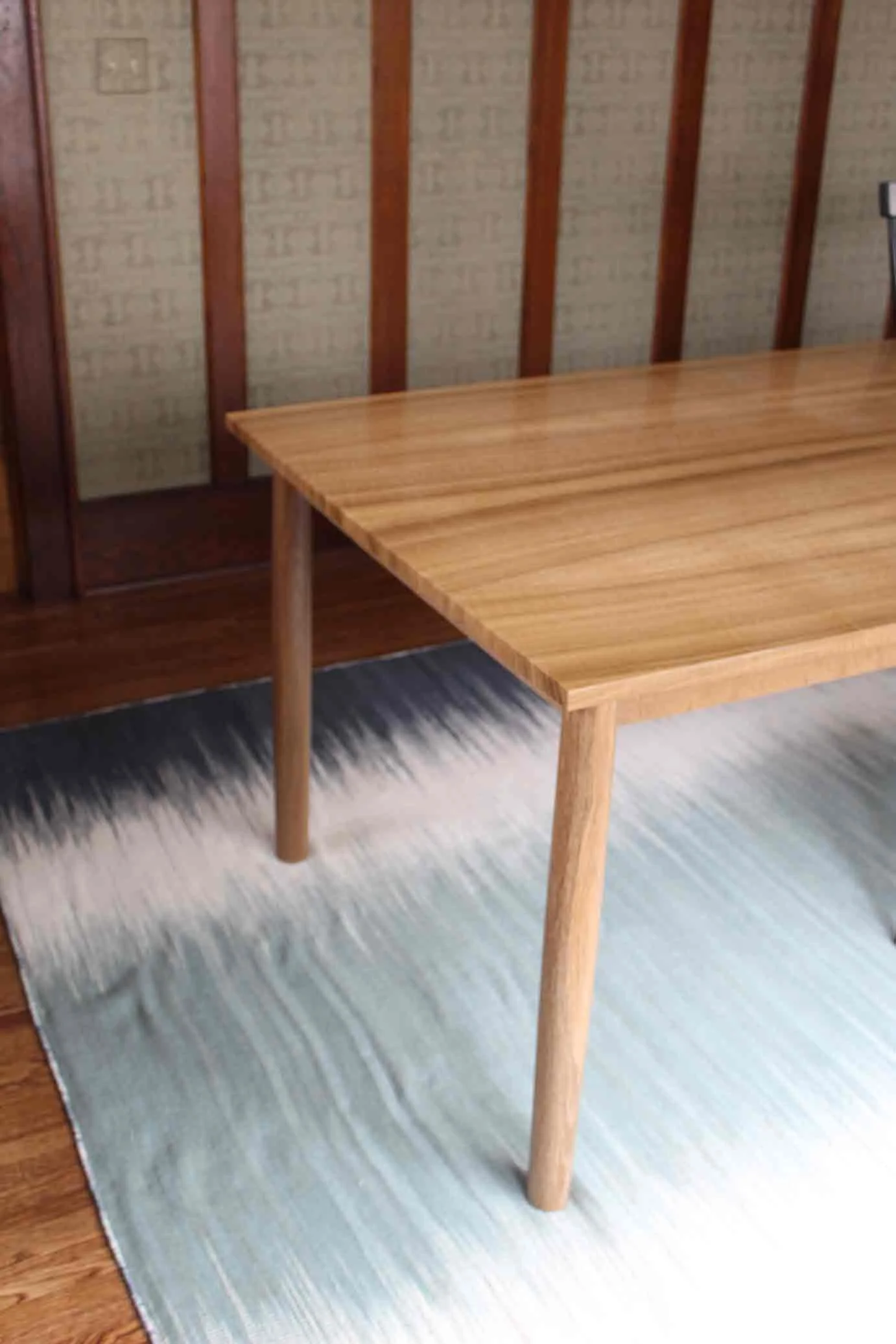
Simple rounded legs which are set on the corners provide maximum chair room and eating flexibility. The simple legs compliment the design of the top. Design elements are minimalized, visual display of the wood is maximized.
The table easily seats eight, and can accommodate dinner parties of ten.