White Oak German Schuhschrank Shoe Cabinet
About The Project
During one of my corporate career jobs I had the opportunity to work for four years at the headquarters of my German employer. The wife, kids, cat and a cargo box of furniture and personal belongings came along. This is how I became familiar with the omnipresent German Schuhschrank, which translates to “shoe cabinet.”
Schuhschranks exist for two main reasons. The first is due to historic German property tax laws (Grundsteuer) which considered a room with a door a taxable space, leading to a "closet tax" that made built-in closets rare. Consequently, Germans traditionally used free-standing wardrobes or cupboards (Schrank) to avoid higher taxes on room counts. Modern property tax is primarily based on property value, but the legacy continues to this day of few closets in home design.
Secondly, being an organized society, one can’t just leave things lying about. This is codified in a national German saying “Alles muss in Ordnung sein” - everything must be in order. For example, when a kid falls on the playground and skins their knee, no question from the German parent if they are hurt, just “Ist alles in Ordnung?” - is everything in order? Shoes also need to be in order, hence Schuhschranks.
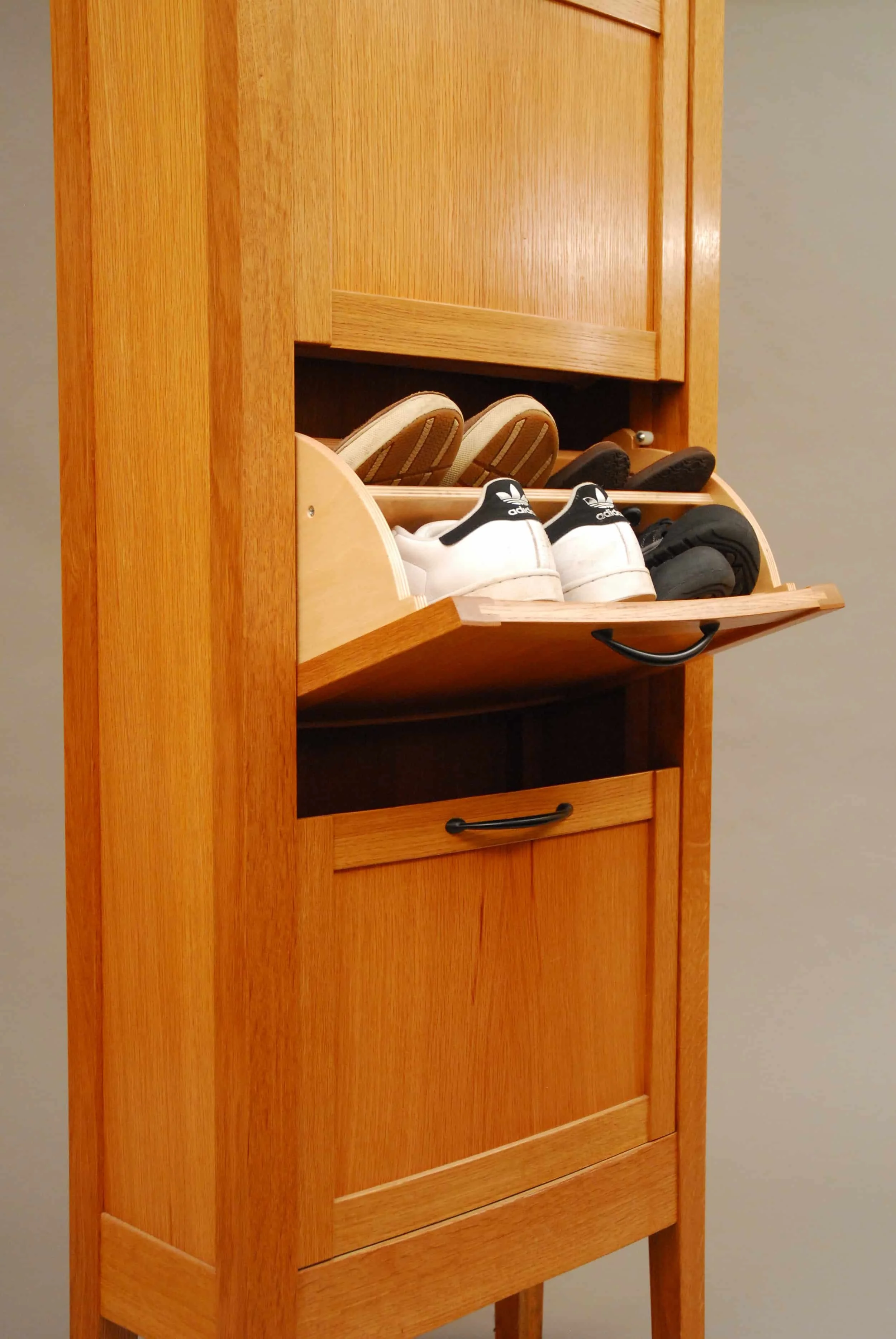
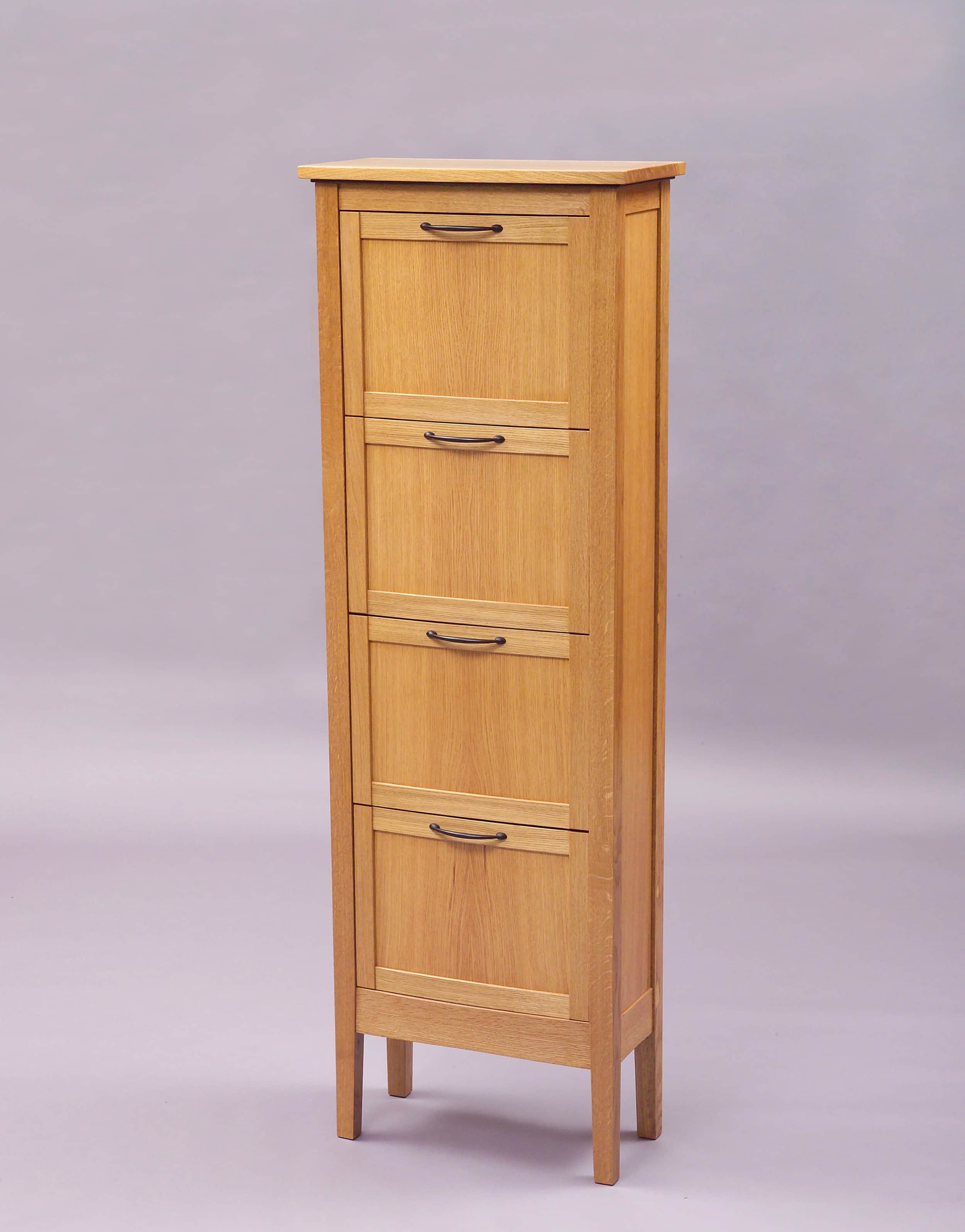
This is a refined white oat version of the typical Schuhschrunk design. The gently outward bowed doors of the cabinet tip forward to reveal the shoe compartments. Each compartment holds four pairs of shoes. Each person in this four person household has their own drawer. The cabinet features dyed black detailing which matches a companion bookcase in the same room.
Schuhscranks typically are placed just inside the front door, making for easy access and for keeping everything in order.