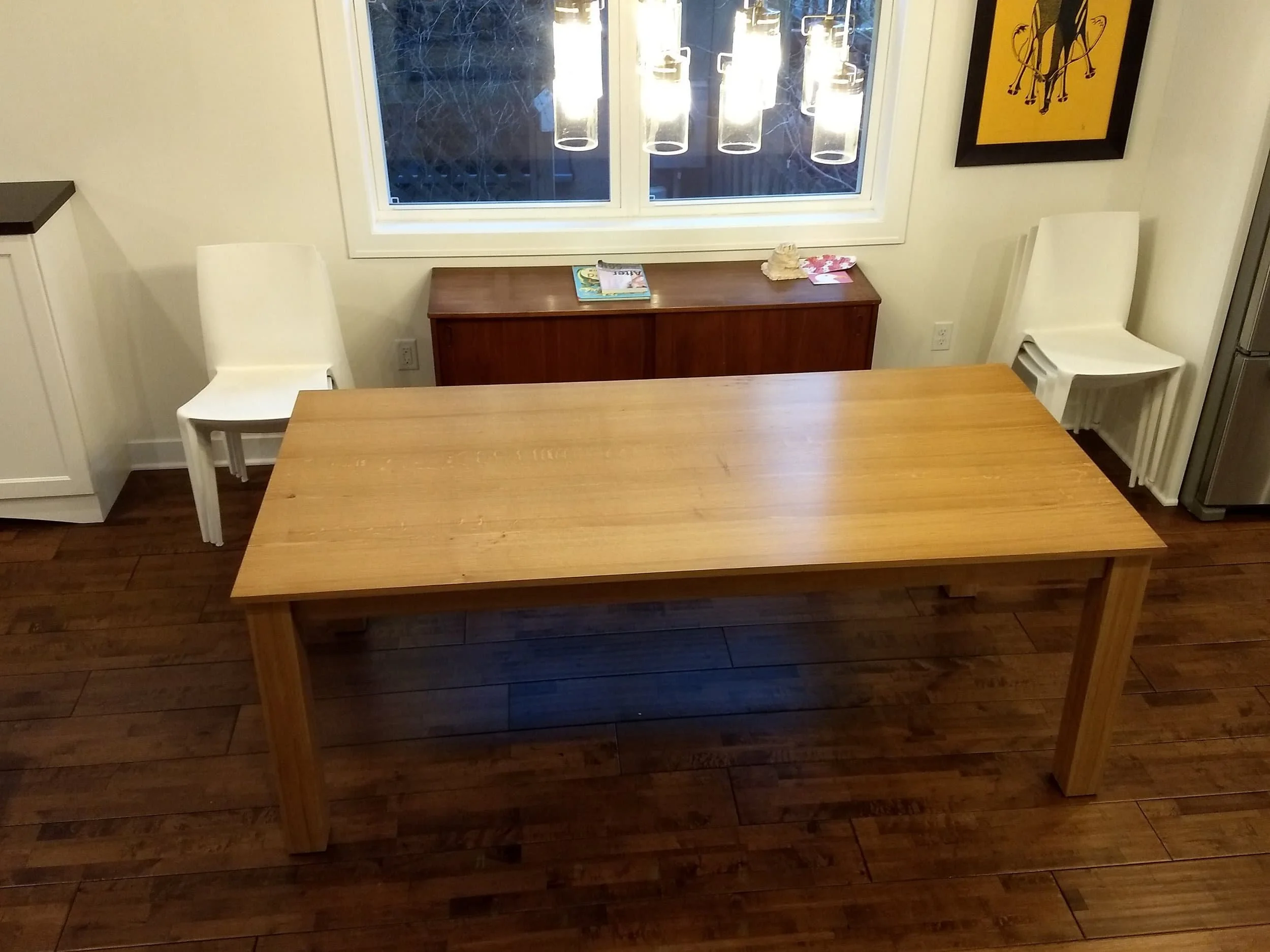
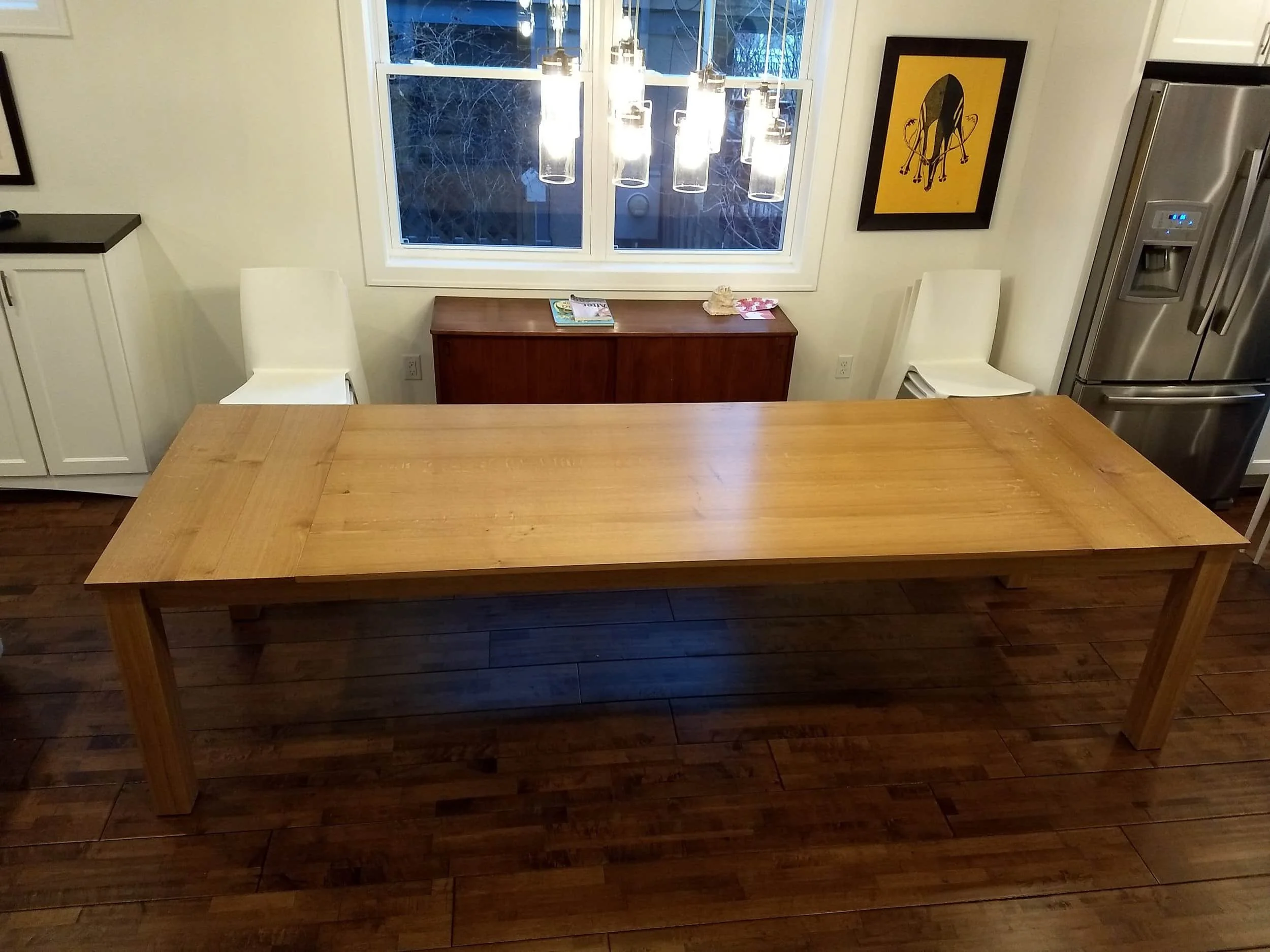
Large White Oak Dining Table With Leaves
About The Project
The five white oak boards that make up the table top were sequentially cut from the same log. The wood was quarter sawn, which is the process of cutting the boards with the saw cut perpendicular to the annual rings. This results in the board faces with a tight, uniform and parallel grain pattern.
The boards were glued together in a slip matched pattern. In this process, the boards are consecutively laid out and glued together along opposing edges, much like dealing a deck of cards. This causes the grain pattern to repeat across the face of the top.
The color was achieved by exposing the table to industrial ammonia fumes, which causes the tannic acid in the wood to darken. After assembly and sanding, the table was placed in a box trailer along with an open pan of ammonia. The longer the exposure to the fumes, the darker the color. To determine the amount of time needed to achieve the optimal color, several test sample boards were fumed for various durations. This process highlights the wood’s natural color striations, curly grain waves, and ray flecks. Unlike staining, which is most often used on commercial furniture, fuming accents the natural variations of the wood, and doesn’t mask them.
The table features two end leaves that are stored within the table when not in use. The end aprons and legs are attached to internal drawers that ride on industrial drawer slides. To expand the table, the drawers are unlocked and pulled out. The leaves are removed from the drawers, placed on the ends of the table and locked in place. With the leaves attached the table is 10’ long and can accommodate 12 people.